I. What is SOC 2?
SOC 2 is a framework developed by the American Institute of CPAs (AICPA) for conducting an audit to assess a service organization's controls in relation to the five trust service principles - security, availability, processing integrity, confidentiality, and privacy The resulting report issued by an independent auditor (CPA) then provides a professional opinion on the design and effectiveness of those controls.
SOC 2 auditing standard was specifically designed for service providers storing customer data in the cloud, making it a crucial component of information security and management for technology and cloud computing companies. SOC 2 REPORT can be used by various stakeholders, including potential clients and regulatory bodies, to gain insight into an organization's data security practices.
II. What are the 5 Trust Services Criteria (TSC) Principles?
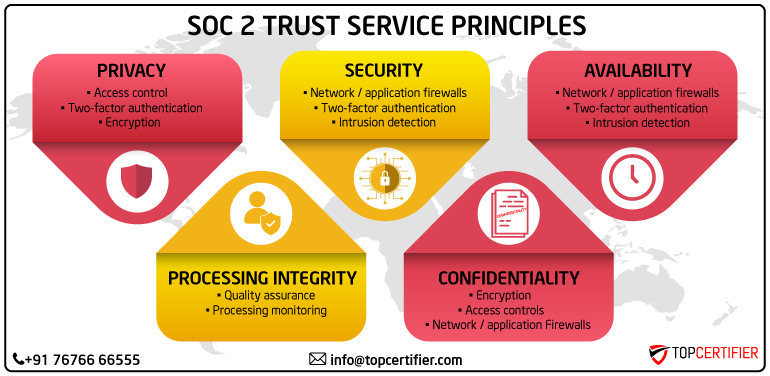
The 5 Trust Services Criteria Principles include:
-
Security: The system is protected against unauthorized access (both physical and logical).
-
This principle addresses how an organization safeguards against unauthorized access to its systems and data, and it may include measures like firewalls, two-factor authentication, and intrusion detection.
-
Availability: The system is available for operation and use as committed or agreed. This principle pertains to the availability of the system as stipulated by the contract or service level agreement (SLA). It involves aspects like network performance, site failover, and disaster recovery.
-
Processing Integrity: System processing is complete, valid, accurate, timely, and authorized. This principle ensures that system processing is complete, valid, accurate, timely, and authorized and may involve aspects like data quality and process management.
-
Confidentiality: Information designated as confidential is protected. This principle pertains to data that is promised to be kept confidential and is restricted to a specific set of persons or organizations, like business plans, intellectual property, internal price lists, and other sensitive financial information.
-
Privacy: Personal information is collected, used, retained, disclosed, and disposed of in conformity with the commitments in the entity’s privacy notice. This principle deals with how personal information is handled, respecting the rights of data subjects.
A SOC 2 REPORT is an internal controls report capturing how a company safeguards customer data and how well those controls are operating. Organizations undergoing a SOC 2 audit must choose which of these trust principles are relevant to their operations.
III. Who Needs SOC 2 Report?
Any organization that provides services that could impact the security, availability, processing integrity, confidentiality, or privacy of customer data may need SOC 2 Compliance / SOC 2 Report. This includes cloud service providers, data centers, Software as a Service (SaaS) companies, managed service providers, and more.
Industries dealing with sensitive data, such as health care, finance, and technology, often require SOC 2 compliance Additionally, businesses seeking to attract enterprise-level clients or maintain existing partnerships may find SOC 2 compliance a competitive advantage.
IV. Why do we need SOC 2 compliance?
In today's data-driven economy, customers and partners are rightfully concerned about the security of their information. So Compliance provides a robust mechanism to address these concerns and demonstrate a commitment to data security and privacy.
Being SOC 2 Compliant can be a business differentiator, especially when dealing with security-conscious customers. It can help organizations win new business, as many clients now mandate SOC 2 Certificate as a prerequisite for engagement.
V. Benefits of SOC 2 Certification
SOC 2 Certification offers several key benefits to organizations:
-
Enhanced Data Security: SOC 2 Certification compels organizations to implement robust security measures, leading to better data protection and reduced risk of breaches.
-
Increased Customer Trust: Demonstrating SOC 2 Compliance builds confidence and trust among customers and stakeholders, fostering long-term relationships.
-
Competitive Advantage: SOC 2 Attestation can be a unique selling point that sets an organization apart from its competitors, especially when vying for contracts or partnerships.
-
Regulatory Compliance: SOC 2 Compliance often aligns with other regulatory requirements, streamlining the compliance process.
-
Operational Efficiency: SOC 2 Report encourages businesses to implement efficient processes and controls, leading to improved operational performance.
VI. Types of SOC 2 Reports
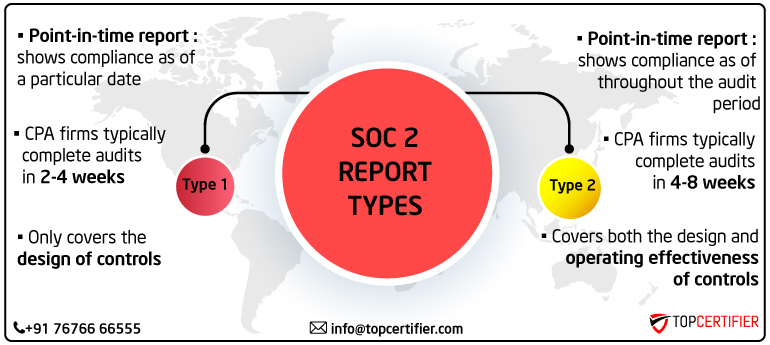
There are two types of SOC 2 reports: SOC 2 Type I and SOC 2 Type II.
-
SOC 2 Type I: This report evaluates the suitability of the design of controls at a specific point in time It assesses whether the organization's systems and processes are designed to meet the TSC criteria
-
SOC 2 Type II: This report evaluates the design and operating effectiveness of controls over a period (usually six to twelve months). It provides more comprehensive assurance by verifying that controls were implemented effectively over time.
VII. SOC 2 vs Other Compliance Frameworks
While SOC 2 is focused on controls related to security, availability, processing integrity, confidentiality, and privacy, there are other compliance frameworks that organizations might consider. Let's compare SOC 2 with some popular ones:
SOC 1 (SSAE 18): SOC 1 reports, previously known as SSAE 16, are designed to assess controls related to financial reporting. It is crucial for service organizations that impact their clients' financial statements. In contrast, SOC 2 focuses on controls relevant to the security and privacy of data.
-
ISO 27001: ISO 27001 is an internationally recognized standard for information security management systems (ISMS). It offers a broader approach to information security, covering not only service organizations but also internal IT systems. SOC 2, on the other hand, specifically targets service providers and their data protection controls.
-
GDPR: The General Data Protection Regulation (GDPR) is a regulation in EU law concerning data protection and privacy. While SOC 2 focuses on controls, GDPR is a legal framework that applies to organizations handling personal data of EU citizens, regardless of their service nature.
-
PCI DSS: Payment Card Industry Data Security Standard (PCI DSS) is targeted at businesses that process credit card transactions. It aims to protect cardholder data and ensure secure payment processing. While there may be some overlap with SOC 2, PCI DSS is more specialized in the payment industry.
Each compliance framework has its unique strengths and focus. SOC 2 is particularly valuable for service organizations looking to assure customers and partners of their data protection efforts.
VIII. The SOC 2 Compliance Process
-
Define Scope: Identify the systems, processes, and data that fall within the scope of the SOC 2 compliance assessment.
-
Gap Assessment: Conduct a thorough review of existing controls and practices to identify gaps between the current state and the TSC criteria.
-
Remediation: Address the identified gaps by implementing appropriate controls and security measures.
-
Select an Auditor: Choose a qualified third-party auditor to conduct the SOC 2 assessment.
-
Pre-Assessment Review: Before the formal audit, perform an internal pre-assessment review to ensure readiness.
-
Audit: The third-party auditor conducts the SOC 2 Assessment, reviewing the design and effectiveness of controls.
-
Report Issuance: After successful completion of the audit, the auditor issues a SOC 2 report.
IX. Challenges and Common Pitfalls
Achieving SOC 2 compliance is not without its challenges:
-
Resource Allocation: The compliance process requires significant time, effort, and resources, which can strain smaller organizations.
-
Evolving Security Landscape: With ever-evolving cyber threats, maintaining compliance may require continuous adjustments and improvements.
-
Documentation: Proper documentation of controls and procedures is crucial for compliance, and lack of it can hinder the process.
-
Staff Awareness: Employees must be aware of their roles in compliance efforts and adhere to established procedures.
-
To navigate these challenges successfully, businesses must adopt a proactive approach to compliance and engage the entire organization in the process.
SOC 2 Resources
- SOC 2 Overview
- SOC 2 Guidelines
- SOC 2 Process Roadmap
- SOC 2 Gap Analysis Template
- SOC 2 Awareness Training Template
- SOC 2 Internal Audit Report
X. Maintaining SOC 2 Compliance
SOC 2 compliance is not a one-time achievement; it requires ongoing efforts to stay compliant:
-
Regular Assessments: Conduct periodic internal assessments to identify any new gaps or changes in the organization that may impact compliance.
-
Continuous Monitoring: Implement continuous monitoring mechanisms to track security incidents and potential vulnerabilities.
-
Incident Response Plan: Have a well-defined incident response plan in place to handle security breaches effectively.
-
Staff Training: Regularly train employees on security best practices to maintain a security-conscious culture.
Conclusion:
In an era of increasing data breaches and cyber threats, SOC 2 Report serves as a vital tool to fortify the barriers against potential attacks and unauthorized access to sensitive information. As businesses strive to stay ahead in a fiercely competitive market, SOC 2 Compliance stands as a pillar of trust and reliability, helping them navigate the digital landscape with confidence.
SOC 2 Attestation is not just a technical requirement; it is a commitment to safeguarding information and instilling trust in today's interconnected world. Embracing SOC 2 Compliance helps organizations build a reputation for data security, enhance customer trust, and gain a competitive advantage. With cyber threats on the rise, SOC 2 Compliance is a crucial investment in securing the future of businesses and their customers.
No certification, no fees
Our certification process is guaranteed. If you are not certified, you do not pay us.
Expert consultants
A team with 15+ years of industry experience across more than 20 countries.